NOMATEN HYBRID-SEMINAR September 11: Microstructure, Oxidation, and Degradation of Protective Coatings on TiAl and Ni-Based Superalloys for High-Temperature Applications
NOMATEN HYBRID-SEMINAR
online: https://meet.goto.com/NCBJmeetings/nomaten-seminar
In-person: NOMATEN seminar room (102)
Wednesday, Tuesday 11th 2026 1 PM (CET)
Microstructure, Oxidation, and Degradation of Protective Coatings on TiAl and Ni-Based Superalloys for High-Temperature Applications
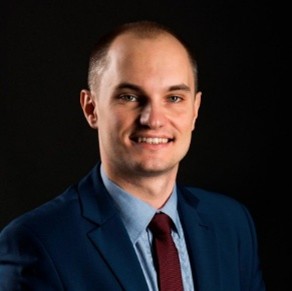
dr hab. inż. Radosław Swadźba
Łukasiewicz Research Network – Upper Silesian Institute of Technology
Abstract:
Modern aircraft engines are pushed to ever higher operating temperatures to lower fuel consumption and increase efficiency. This puts severe oxidation and corrosion demands on structural materials like TiAl intermetallics and Ni-based superalloys. Both alloy classes offer good strength-to-weight ratios and solid high-temperature mechanical properties, but their long-term performance relays on how well they're protected at the surface.
This talk covers recent work on coating development, microstructural design, and oxidation behaviour for TiAl and Ni-based substrates. The coating systems studied include Ti–Al–Cr, nanolaminate MAX phase coatings on γ-TiAl, and bond coatings for Thermal Barrier Coatings on Ni-based superalloys.
Coatings were characterized in detail with HRTEM, STEM, and high-temperature XRD, both as-deposited and after heat treatment, to track phase evolution and behaviour under thermal cycling.
Isothermal and cyclic oxidation testing showed clear differences in performance across the coatings and TBC systems. Degradation modes and the formation and evolution of the protective alumina scale were examined to tie microstructure and composition back to oxidation behaviour, pointing toward more durable, lightweight protection for next-generation aircraft engines.
Bio:
Dr. Radosław is an Area Leader (Deputy Head of Research Group) at Łukasiewicz Research Network – Upper Silesian Institute of Technology in Gliwice, Poland. He received his PhD from the Silesian University of Technology in 2016 and completed his habilitation in 2023. His research focuses on high-temperature materials for aviation applications, including Ni-based superalloys and TiAl intermetallics, with particular emphasis on coatings for high-temperature protection and thermal barrier coatings. He uses advanced characterization techniques, including transmission electron microscopy, to study the oxidation behaviour of these materials. Dr. Radosław completed research internships at AvioAero (General Electric Aviation), Pratt & Whitney, and the German Aerospace Center (DLR). His current research is funded by the National Centre for Research and Development (M-ERA.NET) and the National Science Centre within WEAVE-UNISONO.

Tags