
NOMATEN HYBRID-SEMINAR June 2: Zr fuel claddings under LOCA & Cr-coated E-ATF (CEA studies)
NOMATEN HYBRID-SEMINAR
online: https://meet.goto.com/NCBJmeetings/nomaten-seminar
In-person: NOMATEN seminar room (102)
Tuesday, Jun 2th 2026 1 PM (CET)
A metallurgist overview of past and on-going studies carried out at CEA to support Zr-based nuclear fuel claddings LOCA behavior and the development of E-ATF Cr-coated claddings
Dr. Jean-Christophe Brachet
Paris-Saclay University, CEA, Service de Recherche en Matériaux et procédés Avancés, 91191, Gif-sur-Yvette, France
jean-christophe.brachet@cea.fr
Abstract:
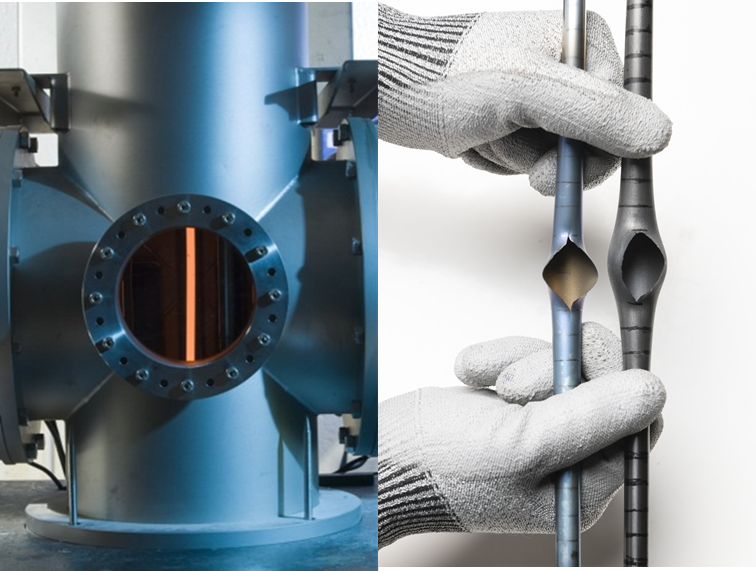
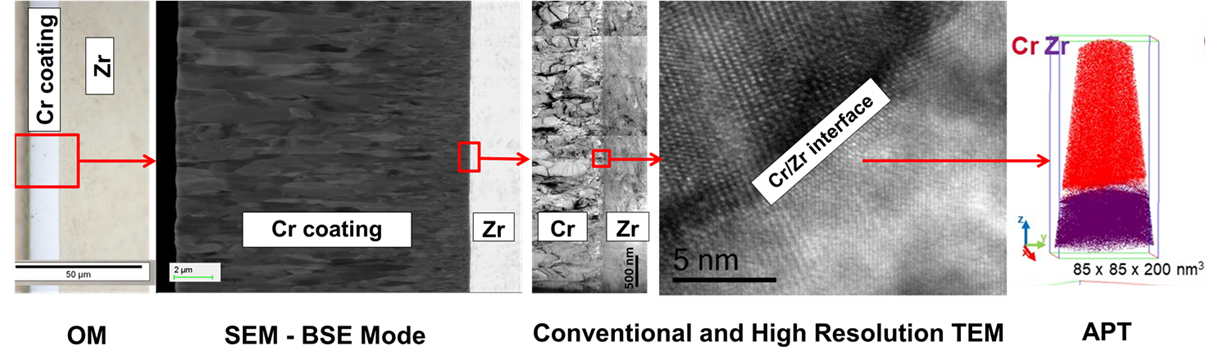
This presentation will cover past and on-going studies carried out these last 30 years at CEA on metallurgical approaches to support advanced Zr-based claddings qualification upon hypothetical LOss-of-Coolant-Accident (LOCA) scenario and, more recently, to develop innovative Cr-coated materials, as Enhanced-Accident-Tolerant-Fuel (E-ATF) claddings. Specific attention will be paid to the fundamental effects of phase transformations and associated oxygen and hydrogen diffusion and partitioning upon High Temperature (HT) transients in oxidizing (steam) environment, in relationship with the thermal-mechanical properties of the claddings, these last ones being strongly connected to LOCA safety issues. Having in mind these objectives, oxygen and or hydrogen enriched “model” alloys have been also used to reproduce the separate and potential coupled effects of these two major chemical elements on the LOCA and post-LOCA behavior of Zr-based nuclear fuel cladding tubes. More recently, “model alloys” approach has been extended to the evaluation of the HT and of the Post-Quenching (PQ) behavior of Cr-coated E-ATF claddings, to account for the additional effect of HT chromium diffusion within the Zr-based wall clad thickness from the coating.
Bio:
Dr. Jean-Christophe Brachet has been working at French Atomic & Alternative Energy Commission (CEA) since 40 years. After ten years devoted to martensitic steels for advanced nuclear reactors (for Gen-4 and Fusion reactors) and Ti-Ni shape memory alloys, his last 30 years carrier at CEA was mainly focused on the study of metallurgical behaviors of Zirconium-based nuclear fuel claddings, especially under hypothetical Loss-Of-Coolant Accident (LOCA) conditions. He significantly contributed to the understanding of the associated phase transformations, High Temperature (HT) steam oxidation mechanisms and kinetics, diffusion and chemical partitioning of oxygen and hydrogen… and their impact on the cladding thermal-mechanical properties during and after hypothetical HT LOCA transients. He was also in charge of the development and evaluation of innovative claddings, i.e., Er containing Zr alloys for High Burn-Up applications. During last decade at CEA, Dr. Jean-Christophe Brachet led the development and evaluation of Cr-coated claddings, which are now internationally recognized as reference Enhanced-Accident-Tolerant-Fuels (E-ATF) concept for LWR applications.
Publications: More than 100 internal CEA technical reports and more than 100 communications and publications in open literature, main inventor or co-inventor of several patents.



Tags