
NOMATEN HYBRID-SEMINAR June 30: Advanced ^1H Time-Domain NMR for Rubber Characterization
NOMATEN HYBRID-SEMINAR
online: https://meet.goto.com/NCBJmeetings/nomaten-seminar
In-person: NOMATEN seminar room (102)
Thursday, Jun 30th 2026 1 PM (CET)
Advanced 1H Time-Domain NMR for Rubber Characterization
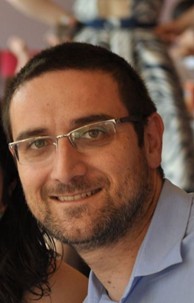
Dr. Juan López Valentín
Elastomers Group. Institute of Polymer Science and Technology, CSIC.
C/ Juan de la Cierva, 3. 28006 Madrid, Spain
Abstract:
Over the past few decades, proton time-domain NMR experiments performed on low-field spectrometers have demonstrated their potential applicability to rubber science and technology. This feasible and versatile experimental approach enables us to obtain molecular-level information on the dynamics and structure of rubber samples, with the aim of improving our understanding of structure-property relationships for a rational design and development of rubber materials.
In this contribution, we review some fundamental aspects of the relationship between the NMR observable and the molecular order parameter of macromolecules, and its link with the rubber network structure and dynamics. It provides the opportunity to obtain a quantitative and comprehensive characterization of dangling chain ends, number of cross-links and their spatial distribution, as well as their effect on the rubber dynamics. Consequently, this experimental approach has provided novel insights into different fundamental areas of rubber science and technology, such as rubber dynamics, vulcanization, ageing and recycling.
Finally, we present some new insights into the field of rubber reinforcement. This complex phenomenon is based on molecular arguments, such as the rubber network structure, the filler-rubber and filler-filler interactions as well as the amplification factors, although quantifying them is still a complex challenge. To address this issue, a pioneering experimental methodology has been developed to characterize the rubber-filler interface at the nanoscale by combining 1H Multiple-Quantum NMR, equilibrium swelling and mechanical experiments, hence establishing a common physical framework between the three approaches and developing a novel combined analysis protocol.
Bio:
Born in Madrid (Spain) in 1978. Research Scientist and head of the Elastomers Group at the Institute of Polymer Science and Technology (ICTP-CSIC) in Madrid, Spain. Studied Chemistry at the Complutense University of Madrid (Spain), and got the PhD degree in 2005 thanks to the work in rubber reinforcement developed in the Department of Elastomers at the ICTP-CSIC. After 31 months of post-doctoral stay at the Martin Luther University Halle-Wittenberg (Germany), where he specialized in the use of low-field NMR in rubber science, was re-incorporated at the Elastomers Group. The main research line is the development of rubber materials for advanced applications, being co-author of more than 100 publications in the rubber field.

Tags