
NOMATEN HYBRID-SEMINAR September 16: Computationally Guided Experiments and Predictions: Accelerating Materials Research under Uncertainty
NOMATEN HYBRID-SEMINAR
online: https://meet.goto.com/NCBJmeetings/nomaten-seminar
In-person: NOMATEN seminar room (102)
Wednesday, September 16th 2026 1 PM (CET)
Computationally Guided Experiments and Predictions: Accelerating Materials Research under Uncertainty
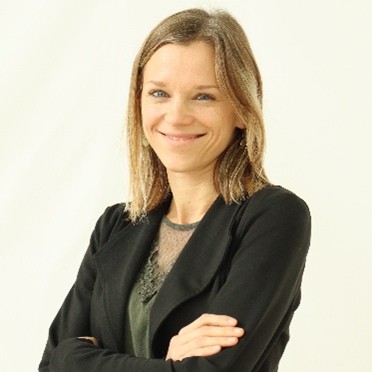
Christina Schenk, PhD
IMDEA Materials Institute, Getafe (Madrid), Spain
Abstract:
The development and characterization of new materials increasingly rely on a combination of experiments, physics-based simulations, and data-driven models. However, experiments can be costly and time-consuming, while high-fidelity computational models often require substantial computational resources. In addition, both experimental observations and model predictions are affected by uncertainty. Computational methods that efficiently combine these different sources of information can therefore help accelerate materials research while reducing experimental and computational costs.
In this talk, I will provide an overview of our work on computational approaches for prediction, model calibration, experimental design, and optimization under uncertainty. A particular focus will be on machine-learning-based surrogate models for efficient prediction and uncertainty quantification, and their integration with Bayesian calibration to infer uncertain model parameters from limited experimental data [1,2]. I will also introduce approaches for design of experiments [3] and Bayesian optimization for optimal experimental design [4-7], where information acquired from previous experiments or simulations is used to guide what should be explored next.
Drawing on examples from our work in materials modeling, characterization, processing, and experimental workflows, I will illustrate how computational methods can help connect models and experiments, quantify uncertainties, explore complex design spaces, and guide data acquisition. Depending on the application, this may involve combining information from different sources or levels of fidelity, accounting for experimental variability and noise, or iteratively selecting informative experiments.
Overall, the talk will focus on the underlying computational concepts and their potential integration into different research workflows rather than on a single materials system or application. The aim is to provide a basis for discussion and to identify opportunities where predictive modeling, uncertainty quantification, and computationally guided experimentation could complement ongoing experimental and computational research.
REFERENCES:
[1] Kennedy, M.; O’Hagan, A. Bayesian calibration of computer models. Journal of the Royal Statistical Society: Series B (Statistical Methodology), 2001, 63, 425–464.
[2] C. Schenk, I. Romero, A framework for the Bayesian calibration of complex and data-scarce models in applied sciences, Archives of Computational Methods in Engineering, 2026. [Link]
[3] C. Schenk; M. Haranczyk, CASTRO – A novel constrained sampling method for efficient exploration in materials and chemical mixture design, Computational Materials Science, 2025, 252:1137804. [Link]
[4] B. Özdemir, M. Hernández-del-Valle, C. Schenk, D. Wang, M. Haranczyk, Bayesian Optimization Guiding the Experimental Mapping of the Pareto Front of Mechanical and Flame-Retardant Properties in Polyamide Nanocomposites, Advanced Intelligent Discovery 2(3), 2025, e202500054. [Link]
[5] M. Hernández-del-Valle, C. Schenk, L. Echevarría-Pastrana, B. Ozdemir, E. Dios-Lázaro, J. Ilarraza-Zuazo, D.-Y. Wang, and M. Haranczyk, Robotically automated 3D printing and testing of thermoplastic material specimens. Digital Discovery, 2023, 2(6):1969–1979. [Link]
[6] C. Schenk, M. Hernández-del-Valle, L. Calero-Lumbreras, M. Noack, M. Haranczyk, Noise-aware optimization in nominally identical manufacturing and measuring systems for high-throughput parallel workflows, Advanced Engineering Informatics, 76:104960, 2026. [Link]
[7] S. Zorkaltsev, M. Haranczyk, C. Schenk, Bayesian Optimization of Genetic Algorithm Hyperparameters in a Multi-Fidelity Framework for Efficient Lattice Material Design. arXiv:2607.07289, 2026. [Link]
Bio:
Dr. Christina Schenk is a Staff Scientist, Ramón y Cajal Fellow, and Head of the ML4Materials Lab at IMDEA Materials Institute, Spain. She received her Ph.D. in Mathematics from Trier University, Germany, in 2018 and has over eight years of international postdoctoral research experience across academia and industry.
Her research lies at the intersection of mathematical modeling, machine learning, uncertainty quantification, Bayesian inference, and optimization, with a focus on developing computational methods for complex physical and engineering systems. Her work spans applications in materials science, chemical manufacturing, pharmaceuticals, environmental science, healthcare, and food production, with particular interests in uncertainty-aware calibration and prediction, surrogate modeling, computationally guided experimentation and data-driven decision-making.
Before joining IMDEA Materials, she held research positions at Carnegie Mellon University, the Basque Center for Applied Mathematics (BCAM), and Lawrence Berkeley National Laboratory. She has authored more than 30 scientific publications, contributed to numerous interdisciplinary research projects, and developed open-source computational tools for modeling, optimization, and AI-driven decision-making. Her work bridges methodological development and practical implementation, with an emphasis on translating computational advances into tools for real-world scientific and engineering problems.

Tags