NOMATEN Autumn School 2025 – Innovation through Collaboration Where are we? Where are we going? VTT Headquarters in Espoo, Finland

The NOMATEN Autumn School 2025 was held from September 29th to October 2nd 2025 at the VTT Centre for Nuclear Safety (CNS) in Espoo, Finland, under the motto “Innovation through Collaboration: Where are we? – Where are we going?” The event, organized by VTT Technical Research Centre of Finland, the French Alternative Energies and Atomic Energy Commission (CEA), and the NOMATEN Centre of Excellence at the National Centre for Nuclear Research (NCBJ, Poland), brought together researchers, engineers, and young scientists to discuss progress and future directions within the framework of the EU-funded Teaming for Excellence project (Horizon 2020, Grant No. 857470).
The School began on Monday, September 29th, 2025, with the closed session “Innovation through Research Groups” at VTT, where representatives from NOMATEN, CEA, and VTT discussed ongoing collaborations and strategies for long-term research integration. The day concluded with an informal walking tour of Helsinki, encouraging networking among participants from the three institutions.
Tuesday, September 30th, 2025: The first full conference day began with registration and poster setup at the VTT CNS facilities, followed by the Introductory Session, chaired by Dr. Maria Oksa and Dr. Wade Karlsen (VTT). Opening remarks were delivered by Maria Oksa, who outlined the objectives and scientific framework of the Autumn School and introduced the group work activities. Prof. Jacek Jagielski, the Coordinator of the NOMATEN Centre of Excellence, presented the latest developments within the Teaming for Excellence project, emphasizing the importance of international collaboration and interdisciplinary innovation. Prof. Łukasz Kurpaska, the Director of NOMATEN CoE, followed with an overview of NOMATEN’s recent activities, infrastructure expansion, and ongoing R&D initiatives. Subsequent presentations by Wade Karlsen (VTT), Christophe Gallé and Frédéric Dollé (CEA), focused on collaborative opportunities across the partner institutions and mechanisms for sustainable research networking beyond the Teaming funding horizon.
Two invited keynote talks from the University of Helsinki concluded the introductory session, Assoc. Prof. Mirkka Sarparanta discussed Preclinical radiopharmaceutical development for diagnostics, therapy, and radiobiology studies, highlighting Finland’s contribution to cutting-edge medical isotope research. Prof. Mikko Ritala presented Atomic Layer Deposition (ALD), Stepwise Growth of Thin Films through Saturative Surface Reactions, emphasizing the versatility of ALD for materials engineering in nuclear and biomedical applications.
After the coffee break, researchers from all NOMATEN Research Groups presented updates on their scientific achievements, followed by the panel discussion “Innovation Towards Industry”, moderated by Maria Oksa (VTT). The panelists, Kostas Sarakinos (University of Helsinki), Frédéric Dollé (CEA), Łukasz Kurpaska (NCBJ), Arto Kotipelto (VTT), and Markus Forsback (Fortum) discussed the challenges of transferring scientific results into industrial practice and of fostering innovation ecosystems that link academia and technology companies.
The afternoon Session 2 – Materials Science (Nuclear), chaired by Łukasz Kurpaska (NCBJ) and Christophe Gallé (CEA), featured eight technical presentations focusing on radiation effects, alloy performance, and advanced characterization of nuclear materials:
Damian Kalita (NCBJ) – The Role of Chemical Complexity in the Radiation Resistance of WTaCrV Refractory High-Entropy Alloy
Cloé Schneider (CEA) – X-rays for the Characterization of Irradiated Materials
Tymofii Khvan (NCBJ) – Correlating Ion- and Neutron-Induced Hardening in Eurofer97 Using Nanoindentation and CPFEM Modeling
Guillaume Josserand (CEA) – Advances in the Development of ODS Steels
Pedro Ferreiros (VTT) – Advanced Characterisation of Inclusions Acting as Brittle Fracture Initiators in RPV Welds
Karol Frydrych (NCBJ) – Continuum-Level Modelling of Berkovich Indentation in Ion-Implanted Stainless Steel
Eloa Lopes Maia (CEA) – Internal Corrosion Mechanisms in Fuel Cladding Induced by Fission Products
Nidhin Mathews (VTT) – Oxidation Behaviour of LPBF 316L Stainless Steel in Supercritical CO₂.
The day concluded with a networking dinner at Bastion Bistro, Suomenlinna, after a scenic ferry ride from Helsinki’s Kauppatori.
The second day, Wednesday, October 1st, 2025, began with Session 3 – Materials Science (Non-Nuclear), chaired by Mikko Vepsäläinen (VTT) and Javier Dominguez (NCBJ), featuring six diverse presentations on catalytic materials, corrosion, additive manufacturing, and structural assessment:
Amil Aligayev (NCBJ) – Design and Multiscale Simulation of Nanostructured Catalysts for Hydrogen Production and Biomedical Applications
Javier Dominguez (NCBJ) – A Data-Driven Machine Learning Approach for Predicting High-Temperature Mechanical Behaviour of Structural and Composite Materials
Wilfried Pacquentin (CEA) – Laser Additive Manufacturing for Repair and Embedded Functionality
Suvi Lamminmäki (VTT) – Non-Sacrificial Anodic Deposition of Ni-HITP 2D MOFs
Ahsan Chonche (VTT) – Corrosion of Steels for Cavern Thermal Energy Storage Applications
Nithin Puthiyaveettil (VTT) – Non-Destructive Testing for Hydrogen and Ammonia Storage Tanks.
The mid-morning Group Work Session divided participants into six working groups addressing cross-institutional collaboration beyond the Teaming project. Topics included radiopharmaceuticals, materials cooperation, research infrastructure, training opportunities, joint publications, and commercialization strategies, with facilitators from VTT, CEA, and NOMATEN.
The afternoon Session 4, Radiopharmaceutical Sciences, chaired by Marek Pruszyński (NOMATEN/NCBJ) and Frédéric Dollé (CEA), included twelve joint and individual presentations covering radiochemistry, nanocarriers, isotope labelling, and novel therapeutic strategies. Highlights included:
Radiolabeling of Biomolecules with Scandium Isotopes (M. Richard, CEA / M. Pruszyński, NCBJ),
UCNPs Grafted with Antibodies (K. Iljin, VTT / K. Zajdel, NCBJ),
Boron-Rich Nanoparticles for Ultra-Targeted Tumoricidal Activity (E. Gravel, CEA),
Disulfide Rebridging Strategies for Radiolabeling (M. Richard, CEA / A. Krzyczmonik, NCBJ), and
Development of New Bioconjugation Techniques for Pretargeting Approaches (C. Marre, CEA / M. Pruszyński, NCBJ).
Two invited lectures completed the radiopharmaceuticals session: Prof. Olof Solin (Turku PET Centre) – Radiopharmaceuticals for PET in Finland: A Brief Overview, and Risto Ahorinta (Curium Pharma) – What Breaks When You Scale? Radiopharmaceuticals from Lab to Market.
Professor Olof Solin from the Turku PET Centre (Finland) delivered a lecture entitled “Radiopharmaceuticals for PET in Finland: A Brief Overview.” His presentation gave participants an in-depth look at Finland’s advanced infrastructure for positron emission tomography (PET) research and radiopharmaceutical production. He discussed the evolution of PET imaging in Finland, highlighting the country’s unique integration of academic research, clinical application, and national isotope production capabilities. Professor Solin emphasized the crucial role of cooperation among university laboratories, hospital facilities, and commercial suppliers in maintaining a continuous pipeline of innovation in diagnostic radiopharmaceuticals. He also presented examples of novel radiotracers under development at the Turku PET Centre, demonstrating how translational research can rapidly progress from the experimental stage to clinical trials, particularly in oncology and neurology.
The following presentation, given by Risto Ahorinta from Curium Pharma, entitled “What Breaks When You Scale? Radiopharmaceuticals from Lab to Market,” focused on the industrialization and regulatory aspects of radiopharmaceutical development. Ahorinta shared the company’s extensive experience in scaling up production processes for clinical-grade radiopharmaceuticals, addressing the complex challenges of ensuring product stability, quality control, regulatory compliance, and logistical safety. He highlighted how even minor differences between laboratory synthesis and full-scale production can significantly affect radiochemical purity and clinical performance. His talk illustrated the importance of early collaboration between academic research groups and industry partners to anticipate technical and regulatory constraints at the design stage of new radiopharmaceutical compounds.
Together, both lectures provided participants with a holistic understanding of the radiopharmaceutical value chain – from fundamental isotope chemistry and laboratory innovation to clinical translation and large-scale manufacturing. The discussions underscored the importance of multidisciplinary collaboration, bridging chemistry, radiobiology, medical imaging, and pharmaceutical engineering to accelerate the development of next-generation radiopharmaceuticals in Europe.
The day concluded with Session 5, PhD Presentations and Poster Session, chaired by Frédéric Dollé (CEA) and Iwona Jóźwik (NCBJ), featuring eleven 3-minute flash talks from young researchers representing NOMATEN, VTT, and CEA. Awards were presented to the best PhD talk and best poster, with a closing summary by Maria Oksa and Kristiina Iljin (VTT).
The final day, Thursday, October 2nd, 2025, was devoted to laboratory visits at the University of Helsinki (Kumpula Campus), where participants explored the Accelerator Laboratory, Radiochemistry Laboratory, X-ray Laboratory, and Detector Laboratory, gaining firsthand experience of Finnish research infrastructure supporting nuclear, materials, and radiopharmaceutical sciences.
The Autumn School concluded with the final closed session “Innovation Through Research Groups”, dedicated to planning the next phase of joint research and Teaming sustainability beyond 2027.
The NOMATEN Autumn School 2025 successfully combined scientific presentations, collaborative workshops, and industrial dialogue, thereby strengthening trilateral cooperation among NOMATEN (NCBJ, Poland), VTT (Finland), and CEA (France). The event fostered interdisciplinary research, showcased progress in nuclear materials and radiopharmaceutical sciences, and provided a platform for young scientists to develop skills and networks essential for the future European Research Area.
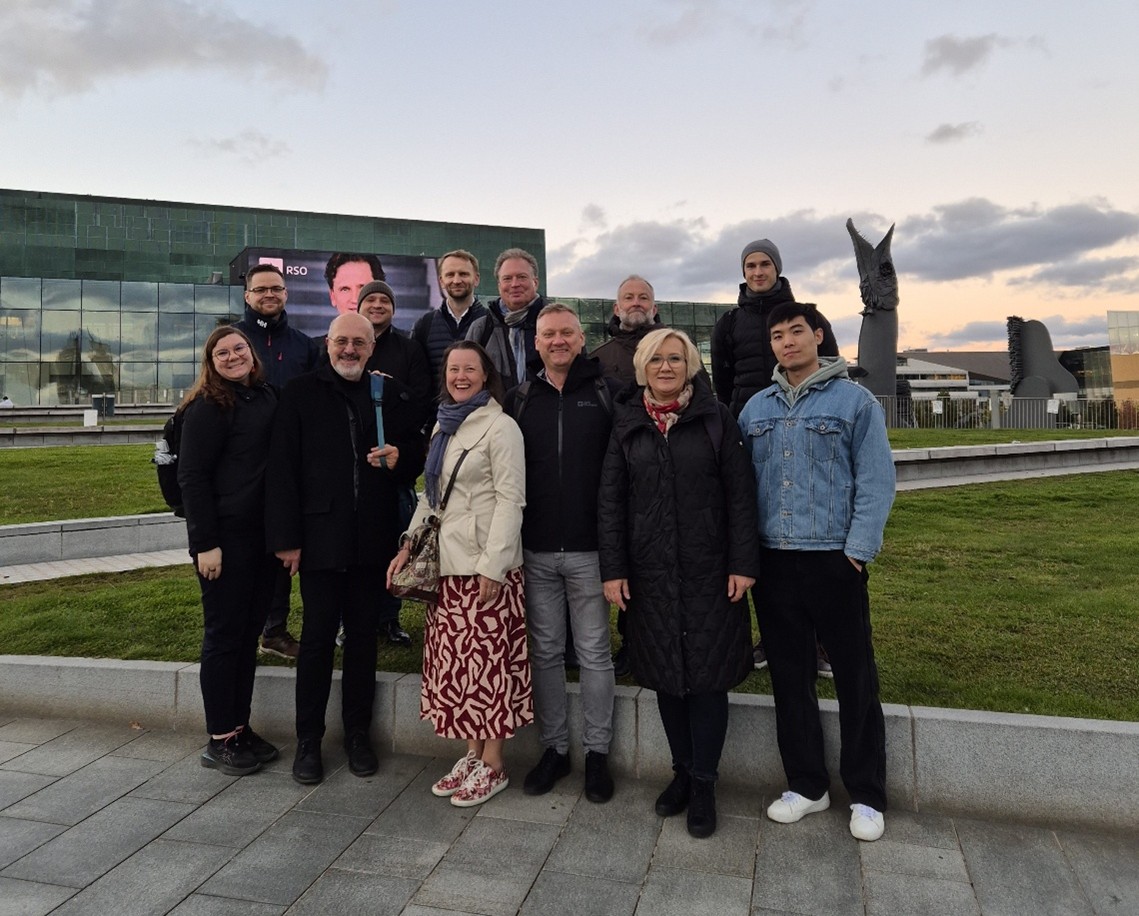
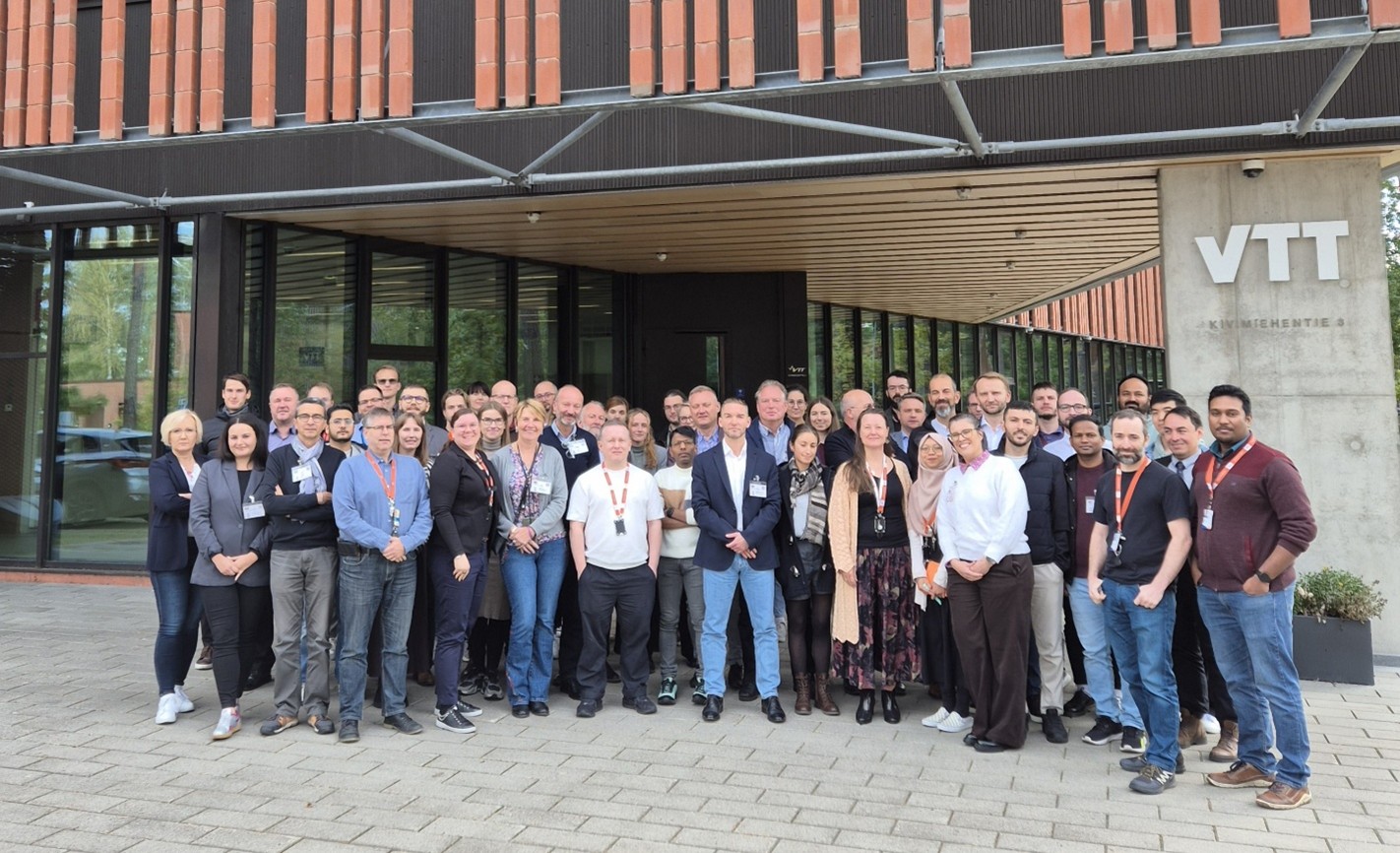
Participants of the NOMATEN Autumn School 2025 Innovation through Collaboration
Where are we? Where are we going?
VTT at the Headquarters in Espoo, Finland


Tags