NOMATEN - blog

NOMATEN, in collaboration with CEA and VTT, is organising a four-day scientific training workshop dedicated to the Phase Field approach for modelling microstructural evolution in irradiated alloys for nuclear applications.

Modern aircraft engines are pushed to ever higher operating temperatures to lower fuel consumption and increase efficiency. This puts severe oxidation and corrosion demands on structural materials like TiAl intermetallics and Ni-based superalloys. Both alloy classes offer good strength-to-weight ratios and solid high-temperature mechanical properties, but their long-term performance relays on how well they're protected at the surface.

Over the past few decades, proton time-domain NMR experiments performed on low-field spectrometers have demonstrated their potential applicability to rubber science and technology. This feasible and versatile experimental approach enables us to obtain molecular-level information on the dynamics and structure of rubber samples, with the aim of improving our understanding of structure-property relationships for a rational design and development of rubber materials.
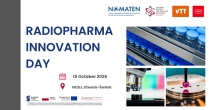
NCBJ and NOMATEN are organising Radiopharma Innovation Day, an event dedicated to showcasing the latest advances in the fields of radiochemistry, radiopharmacy and pharmacy.
The seminar will cover the special-purpose features implemented in Abaqus for thermo-mechanical simulations of additive manufacturing processes, such as SLS/SLM, LDED, and FDM. It will focus on progressive element activation, moving heat source and progressive cooling capabilities.
The seminar will cover the special-purpose features implemented in Abaqus for thermo-mechanical simulations of additive manufacturing processes, such as SLS/SLM, LDED, and FDM. It will focus on progressive element activation, moving heat source and progressive cooling capabilities.
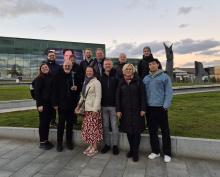
The NOMATEN Autumn School 2025 was held from September 29th to October 2nd 2025 at the VTT Centre for Nuclear Safety (CNS) in Espoo, Finland, under the motto “Innovation through Collaboration: Where are we? – Where are we going?” The event, organized by VTT Technical Research Centre of Finland, the French Alternative Energies and Atomic Energy Commission (CEA), and the NOMATEN Centre of Excellence at the National Centre for Nuclear Research (NCBJ, Poland), brought together researchers, engineers, and young scientists to discuss progress and future directions within the framework of the EU-funded Teaming for Excellence project (Horizon 2020, Grant No. 857470).
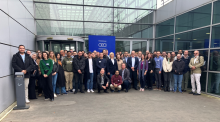
As part of the European NOMATEN teaming project, the 4th scientific school of the NOMATEN CoE dedicated to the multifunctionality of materials for industrial and medical applications, was held from November 5 to 7, 2024, at CEA Paris-Saclay at Neurospin.
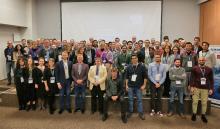
The third international School of the NOMATEN CoE was held from November 27 to 30, 2023, and was dedicated to the multifunctionality of materials for industrial and medical applications with focuses on the following topics: synthesis of new materials, modeling of materials deformation and radiation damage build-up, materials characterization and advanced solutions in radiopharamceuticals and medical therapies. Organized by NCBJ with the support of CEA and VTT, this event focused on materials and compounds for industrial and healthcare applications, and brought together about 75 participants at NCBJ Research centre, Poland. As with previous editions, this school was structured around 4 sessions of presentations and exchanges with some new features, supplemented by visits to the NCBJ center's facilities.
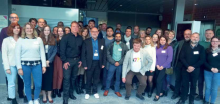
The Autumn school 2022 “Materials and compounds for industrial and health applications” at Espoo, Finland, was 27-29 September 2022. The event consisted of one session on presentations from the NOMATEN TEAMING project and NOMATEN CoE, presentations from project partner organisations and NOMATEN CoE Research Groups. Three topical sessions...


Copyright NOMATEN 2017-2024



