

News
to
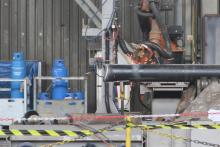
The CoE NOMATEN team (NCBJ + VTT) on March 13-15, 2024 visited companies in the Gdańsk Pomerania region that implement numerous energy projects, including nuclear energy, solutions in the field of renewable energy sources and a sustainable energy system in the country and in Europe. Another on-site visit of CoE NOMATEN directly to production plants was aimed at presenting the research and design capabilities of the NOMATEN Center and encouraging companies to implement joint research and implementation projects in the field of energy solutions and material technologies.
Microstructural stability of multi-component systems under extreme environment represents one of most challenging issues not only in multi-scale materials modelling but also for developing reliable and advanced engineering components for nuclear material applications. Recently, compositionally complex alloys (CCAs) are designed as novel radiation-resistant materials for future fusion power plants while...
The development of chemical reactions that can be performed in living systems (i.e. cells, model organisms) has long held unique fascination in the field of chemical biology. A bio-orthogonal reaction is characterized by the reaction of two functionalities, which will react under mild physiological conditions and are inert towards the biological environment.
Body-centered-cubic (BCC) high entropy alloys show exceptional strengths up to 1900K [1]. Fundamental understanding of the mechanisms that control strengthening is necessary to formulate a theory that enables screening over the immense compositional HEA space [2]. Supported by experimental findings in NbTaTiV and CrMoNbV alloys [3], we show with theory [4] that edge dislocations can
Faced with major societal challenges (ecological crisis, energy crisis), it is essential to better understand the behaviour of materials in order to improve the lifespan of nuclear reactors as well as their safety. The properties of materials are...
Hydrodynamics can play a critical role in the degradation of materials, often defining the rates and mechanisms by which metals corrode. To improve the understanding of the relationship between fluid flow and corrosion, precise and well characterised experimental techniques are required. The application...
Atom probe tomography (APT) is a unique analysis technique providing chemical analysis with near atomic resolution in 3D. Here, recent APT research on nuclear materials performed at Chalmers University will be presented. Zirconium alloys are used as fuel claddings in nuclear reactors and undergo degradation due to corrosion, hydrogen pick-up and irradiation damage. Using APT...
Peptide toxins from venoms have undergone a long evolutionary process allowing host defense or prey capture and making them highly selective and potent for their target. This has resulted in the emergence of a large panel of toxins from a wide diversity of species, with varied structures and multiple associated biological functions. In this way...
Displacive transformations, like deformation twinning or martensitic transformation, are associated with microstructure evolution, which involves nucleation, propagation and annihilation of interfaces. For instance, the functional properties...
Modern science and technologies and their rapid intensive development are in search for innovative efficient methods in a wide range of their applications. Laser and optical methods may offer a numbers of attractive features, such as being contactless, remote, non-destructive, real time and in situ applicable. LANIE laboratory...


Copyright NOMATEN 2017-2024



